Austin's beautiful Hill Country terrain comes with a challenge: slopes. Whether you're dealing with a gentle grade or a dramatic hillside, retaining walls can transform unusable land into functional outdoor living space while preventing erosion and protecting your property.
Why Austin Properties Need Retaining Walls
Common Scenarios - **Hillside homes:** Creating level areas for patios, pools, or gardens - **Erosion control:** Preventing soil loss during heavy rains - **Foundation protection:** Directing water away from your home - **Aesthetic terracing:** Adding visual interest and planting areas
The Cost of NOT Building a Retaining Wall Ignoring slope issues can lead to: - Foundation damage: $5,000-50,000+ to repair - Erosion undermining structures: $10,000-30,000 - Flooded basements/lower levels: $5,000-25,000 - Property value decrease: 5-15%
Retaining Wall Types for Austin
Segmental Concrete Block (Most Popular) **Best for:** Walls 2-6 feet tall
- Cost: $25-50 per square foot of wall face
- Pros: Durable, many style options, DIY-friendly for small walls
- Cons: Can look uniform, requires proper drainage
- Lifespan: 50+ years
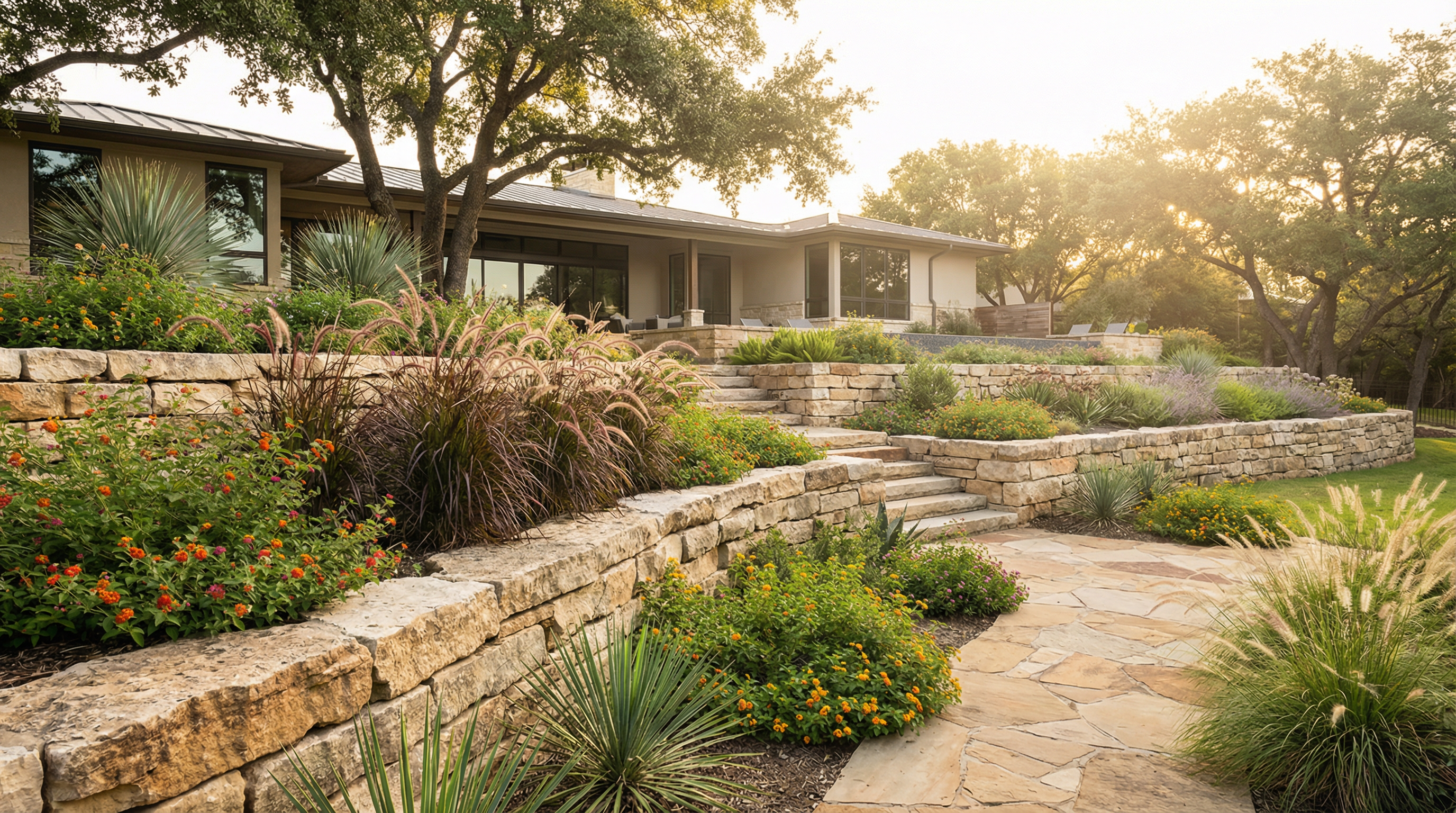
Natural Stone **Best for:** Matching Hill Country aesthetics
- Cost: $35-75 per square foot
- Pros: Timeless beauty, unique character, blends with landscape
- Cons: Higher cost, requires skilled installation
- Lifespan: 100+ years
Poured Concrete **Best for:** Tall walls requiring maximum strength
- Cost: $30-60 per square foot
- Pros: Strongest option, can be faced with stone veneer
- Cons: Requires forms, longer installation, can crack
- Lifespan: 50-75 years
Boulder Walls **Best for:** Natural, rustic look
- Cost: $25-55 per square foot
- Pros: Natural appearance, excellent drainage, low maintenance
- Cons: Takes more space, limited height without engineering
- Lifespan: Indefinite
Engineering Requirements in Austin
When You Need an Engineer In Austin and Travis County, walls over 4 feet tall typically require: - Engineered drawings - Building permit - Inspections during construction
Cost for engineering: $1,500-4,000 depending on complexity
Key Engineering Considerations 1. **Soil analysis:** Austin's expansive clay requires special attention 2. **Surcharge loads:** Driveways, pools, or structures above the wall 3. **Drainage design:** Critical in our heavy rain events 4. **Geogrid reinforcement:** For taller walls
Drainage: The #1 Factor in Wall Longevity
Why walls fail: 90% of retaining wall failures are due to poor drainage. Water buildup behind the wall creates hydrostatic pressure that can topple even well-built structures.
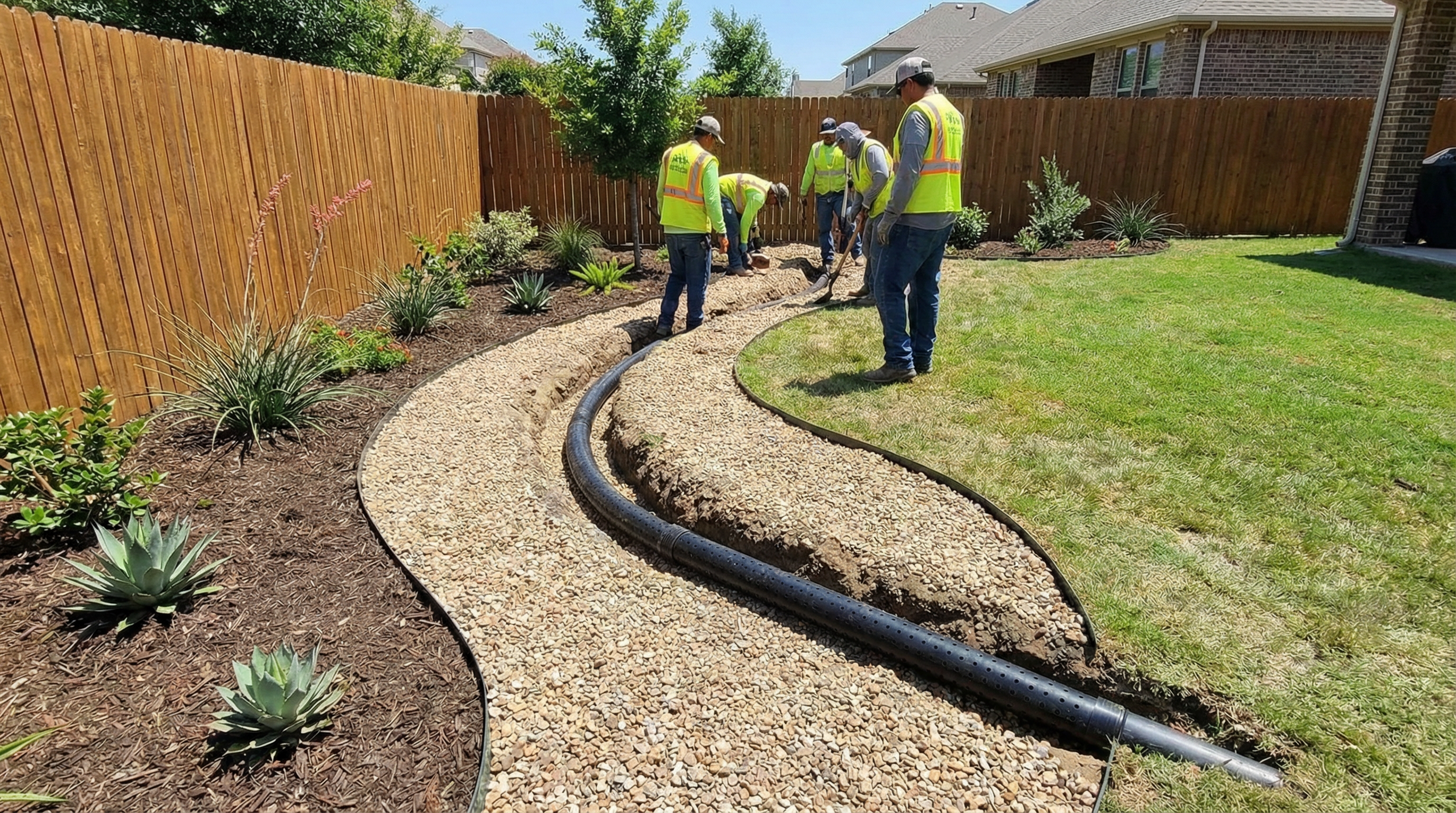
Proper drainage includes: - 12" of gravel backfill behind wall - Perforated drain pipe at base - Filter fabric to prevent soil migration - Weep holes every 4-6 feet - Surface drainage directing water away
Cost Breakdown for Austin Retaining Walls
| Wall Height | Linear Foot Cost | 50 LF Wall Total |
|---|---|---|
| 2 feet | $50-100 | $2,500-5,000 |
| 4 feet | $100-200 | $5,000-10,000 |
| 6 feet | $200-350 | $10,000-17,500 |
| 8 feet | $350-500+ | $17,500-25,000+ |
Includes materials, labor, drainage, and basic landscaping
Terracing: Creating Usable Space
Instead of one tall wall, consider terraced walls:
Benefits: - Each wall can be under 4 feet (avoiding engineering costs) - Creates planting beds between levels - More visually interesting - Easier to maintain
Example: A 10-foot slope can become three 3-foot walls with 4-foot-wide planting terraces between them.
Planting Your Retaining Wall
Top of Wall - Ornamental grasses (Muhly grass, Mexican feather grass) - Trailing plants (Creeping rosemary, lantana) - Small shrubs (Dwarf yaupon holly)
Wall Face (for walls with planting pockets) - Sedums and succulents - Ice plant - Trailing verbena
Base of Wall - Foundation plants to soften the transition - Shade-tolerant options if wall faces north
Maintenance Tips
Annual tasks: - Inspect for cracks or bulging - Clear drainage outlets - Check for erosion at base - Remove vegetation growing in joints
After heavy rains: - Ensure water is draining properly - Look for new cracks or movement - Check for soil washout
Ready to Tame Your Slope?
Every hillside is different. Get a free site evaluation and we'll design a retaining wall solution that transforms your challenging terrain into beautiful, functional outdoor space.